
The Art of Wardrobe Design: Making Every Centimetre Count
When clients ask me to design bespoke wardrobes, they’re often surprised by how much thought goes into the process. It’s not simply about creating beautiful cabinetry to suit your bedroom or dressing room, though that’s certainly important. The real challenge lies in making the very best use of available space whilst ensuring the finished design genuinely works for how you live and dress on the day to day.
Over the years, I’ve learned that successful wardrobe design comes down to asking the right questions and paying attention to the details that many people overlook. You need to itemise your belongings, assess your storage needs and incorporate practical solutions that suit your lifestyle. Here I’d like to share what I consider when designing bespoke wardrobes for my clients.
Know your clothing dimensions
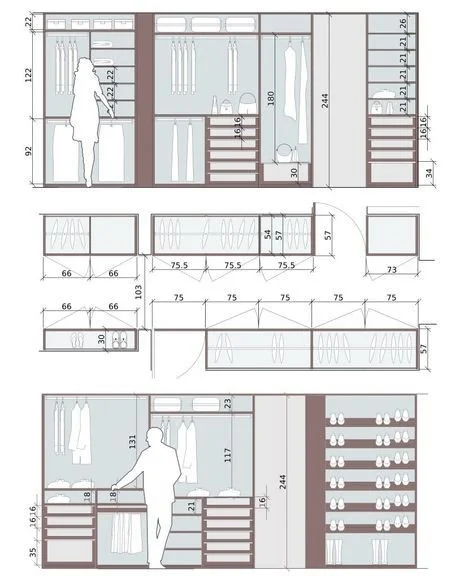
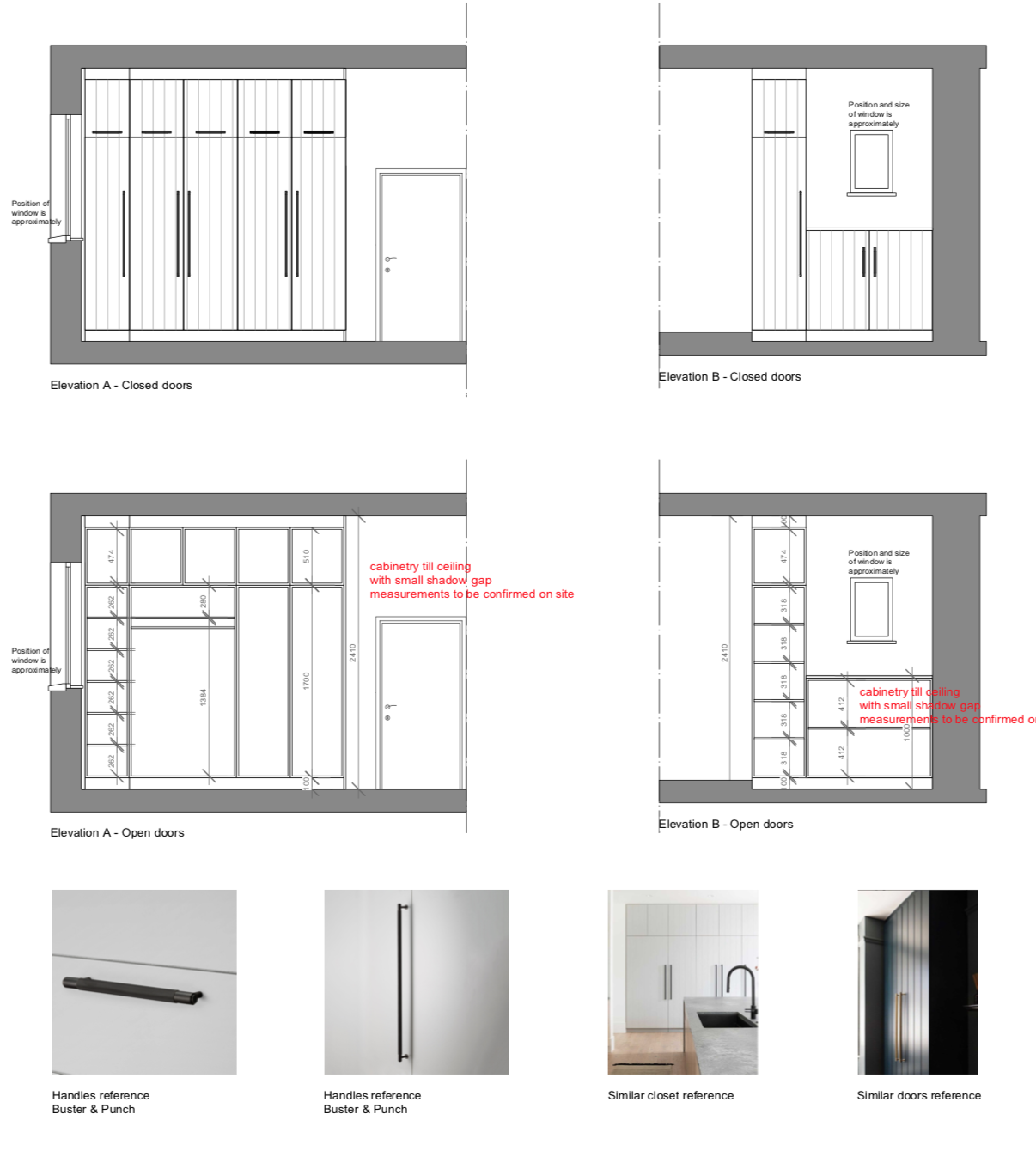
One of the most fundamental aspects of wardrobe design is understanding the physical dimensions of what you’ll be storing. The depth of your wardrobe cabinets and panels typically ranges from 350mm to 600mm. Most clothing items – shirts, blouses, jackets and coats – will fit comfortably within a 600mm deep space. However, if you own specialist items like padded leather motorcycle jackets or ball gowns, you may need additional capacity for these pieces.
Here are some core measurements I always work with:
Folded jumpers and shirts require up to 380mm of linear shelf space each.
Coats need up to 1700mm of vertical hanging space.
Trousers and jeans usually require 1250mm vertically when hung (roughly half that when folded)
Skirts typically need up to 1150mm of vertical space.
Remembering these numbers will directly influence whether your wardrobe functions smoothly or ends up a source of daily frustration.
Think about double vs single hanging space
Before finalising any wardrobe design, I ask clients to evaluate their clothing collection. Do you own more blouses than dresses? How many long coats do you have? This inventory determines whether to include more double-hang or single-hang sections. Shirts, blouses and t-shirts work brilliantly in double-hang sections, maximising vertical space efficiently, while dresses, long coats and jackets require single-hang sections. Getting this balance right makes a huge difference to how your wardrobe suits your everyday needs.
Maximise vertical space
Another core principle I follow is making the most of every centimetre from floor to ceiling. So many pre-built wardrobes waste valuable vertical space simply because it wasn’t considered during the design phase. High shelves for occasional-use items, well-planned double hanging and floor-level storage all contribute to a wardrobe that works harder for you without requiring additional square footage.
Work with awkward corners
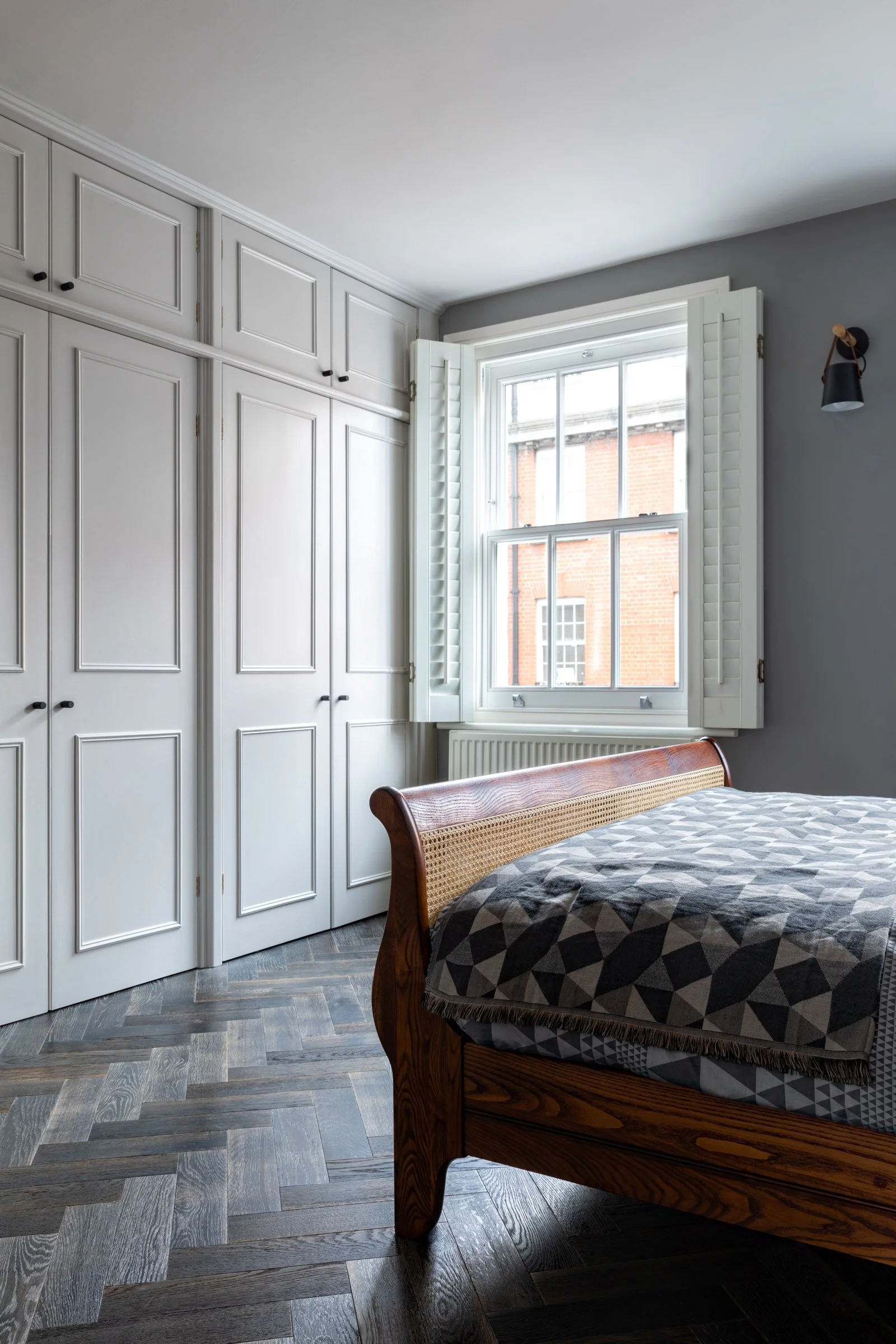
Corners are often the trickiest aspect to get right, but they’re far too valuable to waste. Shelving works particularly well in corner sections, creating accessible storage without dead space. It’s perfectly acceptable to have your wardrobe panel overlap the adjacent wall slightly – whilst corner spaces may not be very easy to access, you won’t be wasting precious storage capacity. These hidden spots are ideal for seasonal items like winter coats that you don’t always need to reach for.
Keep space for shoes and accessories
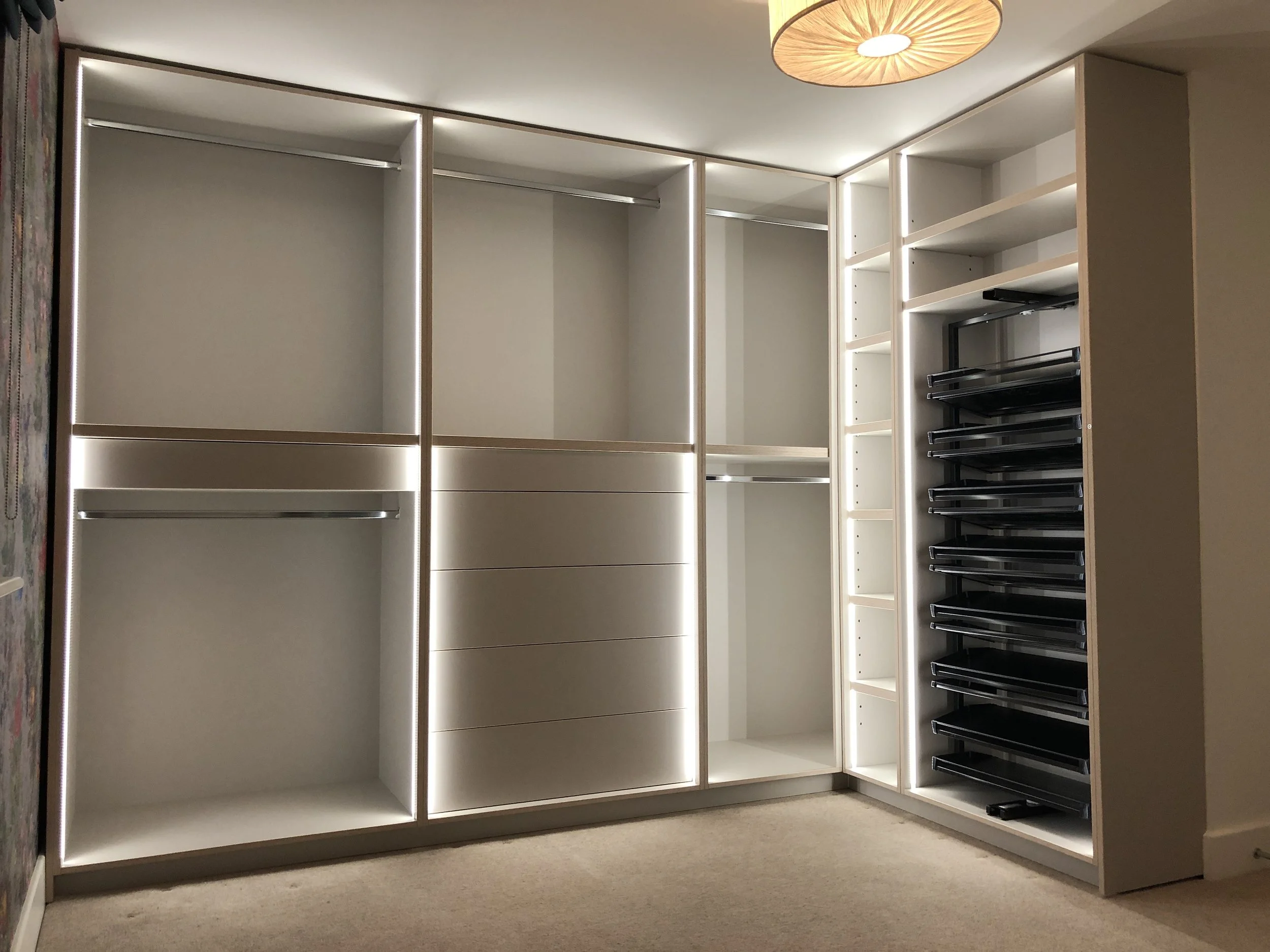
I have a friend who keeps all her shoes – especially the Jimmy Choos – in their original boxes on shallow shelves in her wardrobe. Her reasoning? If they’re important, make proper space for them. I couldn’t agree more. Specialist shoe racks designed for wardrobes work beautifully, but a well-planned series of shelves can be equally effective. The key is allocating dedicated space rather than letting shoes become an afterthought.
Similarly, accessories deserve careful consideration. Everyone has bags, jewellery, ties and belts, and creating organised spaces for these items makes getting dressed so much easier. Pull-out shelves with dividers, compact belt and tie racks mounted in otherwise dead wall space, hanging racks for bags and jewellery trays all contribute to a wardrobe that genuinely supports your morning routine.
Find seasonal storage solutions
Many households observe the ritual of swapping seasonal clothing twice a year – packing away swimwear and shorts in autumn or scarves and jumpers when spring arrives. Building seasonal storage into your wardrobe design from the start makes this process infinitely more manageable. Taking time to store seasonal clothes properly also extends the life of your garments and means fewer headaches when they emerge from hibernation months later. High shelves and cabinets that open from below are perfect for storing items you don’t always access.
Consider the luxury of seating
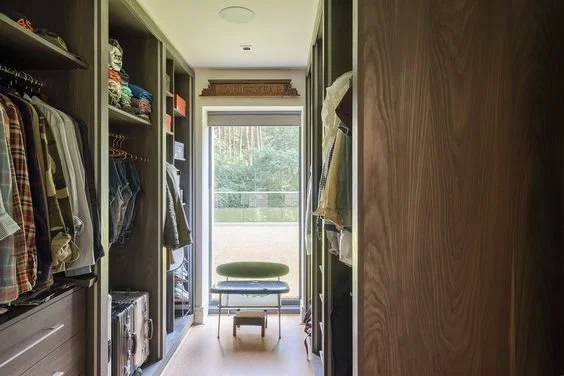
If space permits, I always try to include a bench or chair within or adjacent to the wardrobe area. This simple addition transforms getting dressed from a functional task into a more comfortable, even luxurious experience. It’s these thoughtful touches that elevate good design into something genuinely special.
Think about doors: Function meets aesthetics
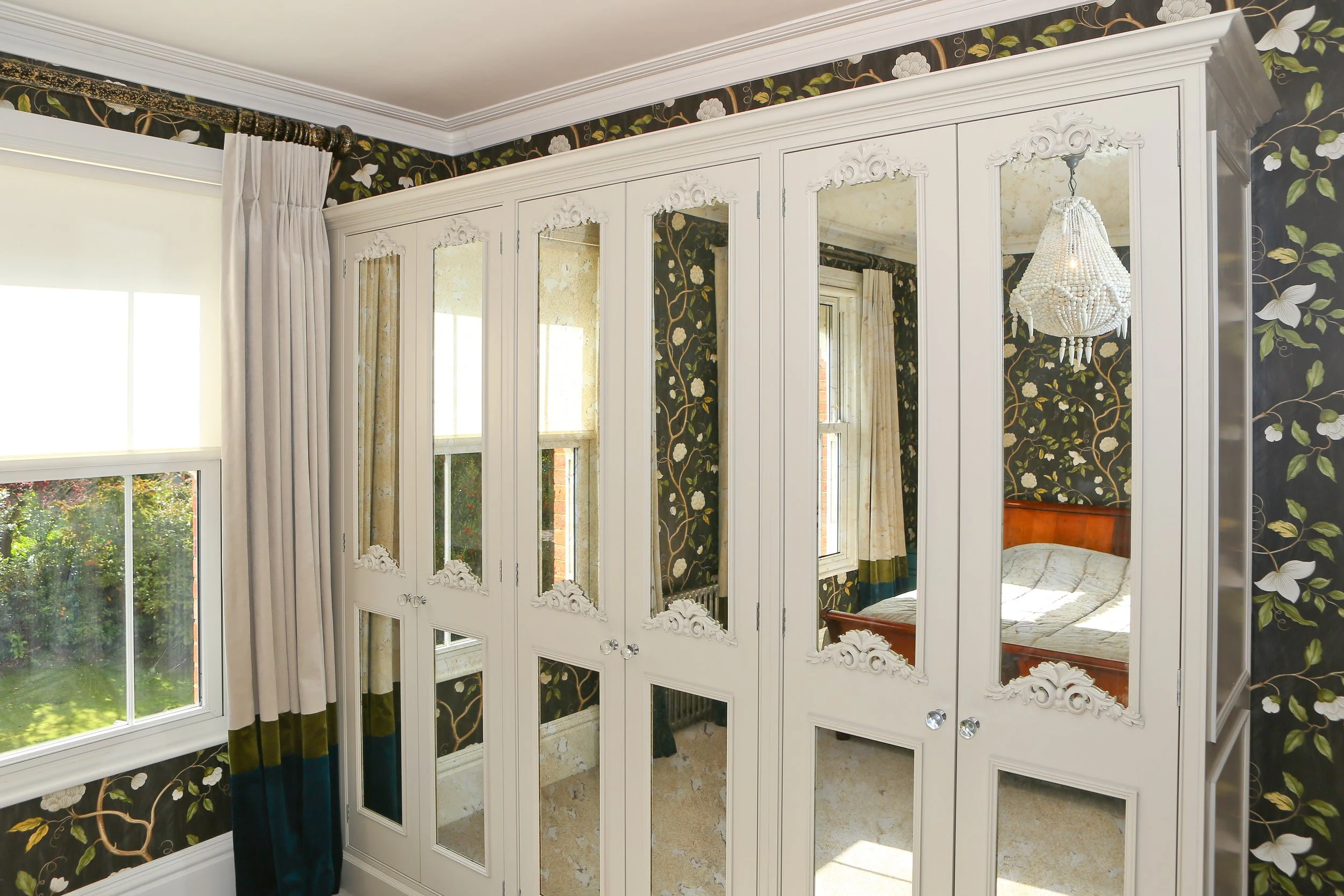
For those fortunate enough to have space for a dedicated dressing room or walk-in wardrobe, doors on the cabinets themselves may be unnecessary. However, most of us need to enclose our wardrobes, which means the doors become a significant design element in the room. Hardware choices matter enormously here. Your wardrobe doors are what you see every day, so this is your opportunity to add texture, colour and personality.
Discover a wardrobe designed around you
The best wardrobes I’ve designed are those that feel completely personalised to their owners. They accommodate specific collections, support daily routines and make efficient use of every available centimetre. When done right, it’s an investment that pays off every single day – from rushed Monday mornings to leisurely weekend dressing.
If you’re considering a bespoke wardrobe for your home, I’d be happy to discuss how we can create storage solutions that suit your unique lifestyle. Get in touch today to explore the possibilities.
Nicky